


How to Add Games to an Expo Stand for Leads
A busy exhibition hall gives visitors plenty to look at and very little time to stop. If you are searching for how to add games to expo stand planning, the aim is not simply to create a queue. It is to give the right people a fun reason to pause, interact with your team and remember your brand after the show.
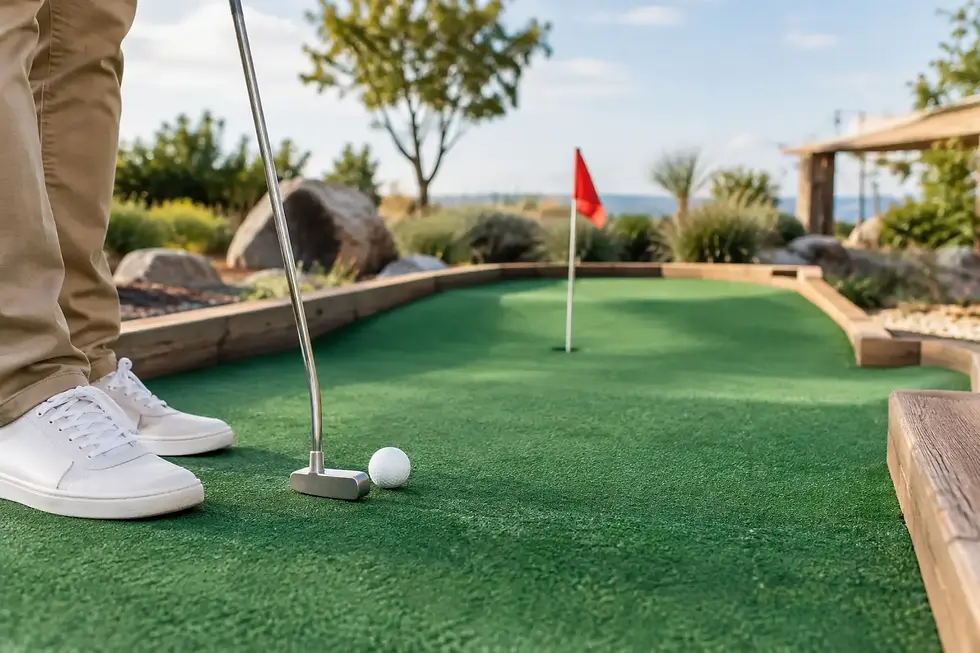
The best games turn a standard stand into a welcoming destination. They break the ice, bring energy to quieter moments and make it easier for your staff to begin genuine conversations. A portable mini golf hole, for example, gives someone a simple challenge they can understand in seconds - and gives your team a natural opening beyond, “Can we help you?”
Start with the outcome, not the game
Before choosing an activity, decide what success looks like for your exhibition. Do you need more footfall, better-quality leads, longer conversations, product demonstrations or social content? One game can support several of these goals, but the format should match your main priority.
If lead generation is the focus, keep the game short and make entering a prize draw part of the experience. For product awareness, build questions, colours or themed obstacles around your campaign. If the stand is intended to strengthen relationships with existing clients, choose a game that encourages a little friendly competition without making guests feel pressured.
This matters because a game can attract a crowd without attracting the people you need to meet. A loud activity with no clear brand connection may create a buzz, but it can also leave staff too busy managing participants to have useful conversations. Plan the experience around your sales and marketing goals first, then select the game that supports them.
Choose games that are easy to join
Trade show visitors are often carrying bags, checking schedules and moving between meetings. They are unlikely to commit to a complicated activity, however impressive it looks. The strongest expo games have a clear action, a short wait and an obvious finish.
Mini golf works particularly well because the rules are familiar to almost everyone. A single putting challenge can take less than a minute, yet it creates a satisfying moment of achievement whether someone sinks the putt or narrowly misses. It is suitable for mixed ages and abilities, so nobody needs specialist knowledge, fitness or a competitive streak to enjoy taking part.
Other workable options include a prize wheel, quick-fire quiz or timed reaction challenge. The trade-off is that some games are more memorable than others. A prize wheel is compact and fast, but can feel generic. A quiz offers good brand education, although it may slow the queue. A well-designed mini golf challenge is visual, social and naturally encourages people to watch, cheer and take a turn themselves.
Keep each turn short
Aim for an experience that takes around 30 to 90 seconds per person. This keeps the stand lively and prevents an inviting queue from becoming a barrier. If your exhibition has long opening hours, a fast format also gives more visitors a chance to participate.
A one-hole course is ideal where space is limited or footfall is high. For a larger stand, two or three holes can give guests more time with your brand and make the attraction look more substantial. Full courses are better suited to events where entertaining clients is a key part of the day, rather than a quick stop on a crowded show floor.
Make the game look like part of your stand
A game should never appear to have been placed in a spare corner five minutes before doors open. Give it a clear home in the stand layout, with enough room for players, spectators and staff to move comfortably.
Position the attraction where it can be seen from the aisle. Mini golf has an advantage here: colourful obstacles, flags and moving players create activity that catches the eye from a distance. The course can be themed to suit the event, from a smart branded putting challenge to a tropical island or pirate-style setup that brings extra personality to a family-focused show.
Keep brand messages visible but not overwhelming. A logo on the start point, a campaign message near the hole or a question on the scorecard can all reinforce who is hosting the fun. Visitors should know immediately what you do, not just that you have an enjoyable game.
Think about practical details too. Check the organiser’s rules on power, sound, height limits, access times and fire routes. Measure the space including the room needed for the queue, not only the game itself. A professional hire team can recommend a course format that fits the footprint and manage setup and takedown around the exhibition schedule.
Give your team a simple conversation route
The game gets attention. Your people make it count.
Brief staff before the event so everyone knows how to welcome players, explain the challenge and move naturally into a relevant question. The question does not need to be a sales pitch. It could be, “What brought you to the show today?” or “Are you looking at options for your next staff event?” The right question helps staff understand whether the visitor is a potential customer, a partner or simply someone having fun.
It also helps to assign clear roles. One team member can invite people over, another can guide the activity and another can speak with visitors as they finish. On a small stand, one person may cover more than one role, but avoid leaving the game unattended while every member of staff is in a long conversation.
Offer a small reward that suits your audience. A branded treat, discount code, useful giveaway or entry into a larger prize draw can work well. The prize should be attractive enough to encourage participation, but not so valuable that people join only for the freebie and disappear before your team can engage.
Capture leads with permission and purpose
A game can make data capture feel less intrusive, but it still needs to be handled properly. Be clear about what visitors are signing up for and only request information you will genuinely use. A name, company and email address may be enough for a business exhibition. Asking for too much at the stand can discourage people who were otherwise happy to take part.
You can ask guests to enter their score, answer one short question or scan a QR code to join the prize draw. Whichever method you use, make it quick and ensure there is a backup if the Wi-Fi is unreliable. Paper entry cards may sound old-fashioned, but they can be useful at busy shows when technology is slowing the queue.
Follow up while the interaction is still fresh. Referencing the challenge in your message gives your team a warmer reason to reconnect than a standard “nice to meet you” email. If someone achieved the day’s best score, celebrate it. If they mentioned a specific need, make that the focus of the conversation.
Build a competition people want to share
Friendly competition gives visitors a reason to return later, bring colleagues over and post about the stand. A leaderboard is simple but effective, especially when scores reset each day or there is a prize for the best attempt at the end of the show.
Keep the rules visible and fair. Explain whether players get one putt or several, whether staff can participate and how ties will be decided. If you are collecting names for a leaderboard, get permission before displaying them. For a less formal approach, use first names and company initials, or let players choose a team name.
Social sharing can add reach, but it should be optional. Create a spot for photographs with a branded backdrop or a playful course feature, then invite visitors to take their own pictures. Do not make posting a condition of playing. The best content comes from people who genuinely enjoyed the experience.
Match the game to your audience and venue
There is no single answer to how to add games to an expo stand because every exhibition works differently. A technology show with decision-makers on tight schedules may need a polished, rapid challenge. A consumer event may benefit from brighter theming, more prizes and space for families to play together.
Consider noise levels as well. A game that needs a microphone, music or constant announcements may not suit a venue with strict sound rules or neighbouring exhibitors holding meetings. Mini golf brings visible fun without requiring a high-volume soundtrack, making it a strong choice for professional environments as well as public-facing events.
For stands where every square metre matters, a compact portable course can deliver far more engagement than a row of stools or a passive screen. Putting Edge can help organisers choose a format that suits the available space, audience and event timetable, with professional installation so the activity is ready when visitors arrive.
The most effective expo game feels easy for the visitor and purposeful for the organiser. Give people a quick moment of fun, give your team a reason to talk, and make the stand somewhere they will be pleased to tell colleagues about.


Comments