


How to Choose Event Entertainment That Works
A packed dance floor looks great in photos. A silent room full of guests checking their mobile phones does not. That is why knowing how to choose event entertainment matters so much. The right choice brings people together, fills awkward gaps, and gives your event something guests will actually remember.
The challenge is that entertainment is never one-size-fits-all. What works brilliantly at a wedding reception may feel out of place at a trade show. What keeps children busy at a birthday party may not land with a mixed-age corporate crowd. The best entertainment is not just fun on paper - it fits the mood, the space, the schedule and the people in the room.
Start with the reason people are attending
Before comparing acts, activities or hire options, get clear on the purpose of the event. Are you bringing people together to celebrate, helping colleagues relax, drawing visitors to a stand, or giving guests something to do between key moments? Entertainment should support that goal rather than compete with it.
At a wedding, for example, guests often need something sociable that works across generations and keeps the energy up between the meal and the evening party. At a corporate event, the aim may be to encourage conversation and create a more relaxed atmosphere without making anyone feel put on the spot. At a birthday party, you may simply want something that keeps everyone engaged without turning the whole day into a timetable.
When you know what success looks like, choosing becomes much easier. You stop asking, "What looks impressive?" and start asking, "What will actually work here?"
How to choose event entertainment for your guest list
Your guest list tells you more than any trend ever will. Age range, group size and how well people know one another all shape what entertainment will land well.
If your event includes mixed ages, broad appeal matters. Activities that are easy to understand and simple to join tend to perform better than anything too niche or high-pressure. Guests should be able to walk over, get involved quickly and enjoy themselves without feeling they need special skills.
This is where interactive entertainment often has the edge over passive entertainment. Watching a performance can be fantastic in the right setting, but it does create a clear divide between performer and audience. Interactive options give guests something to do together. That tends to spark more conversation, more laughter and more memorable moments.
That said, it depends on the tone of your event. A black-tie dinner may suit elegant background entertainment better than anything highly energetic. A summer party or wedding reception can usually carry something more hands-on. The key is matching the level of participation to the comfort level of your guests.
Match the entertainment to the venue, not just the idea
An entertainment idea can sound perfect until you look at the room. Venue size, layout, access and power supply all matter, and they matter earlier than many organisers expect.
If space is tight, bulky setups can quickly become a headache. If your venue has several zones, entertainment that can sit naturally within the flow of the event is often a better choice than something that demands a dedicated stage area. Outdoor events bring their own variables too, from weather cover to uneven ground.
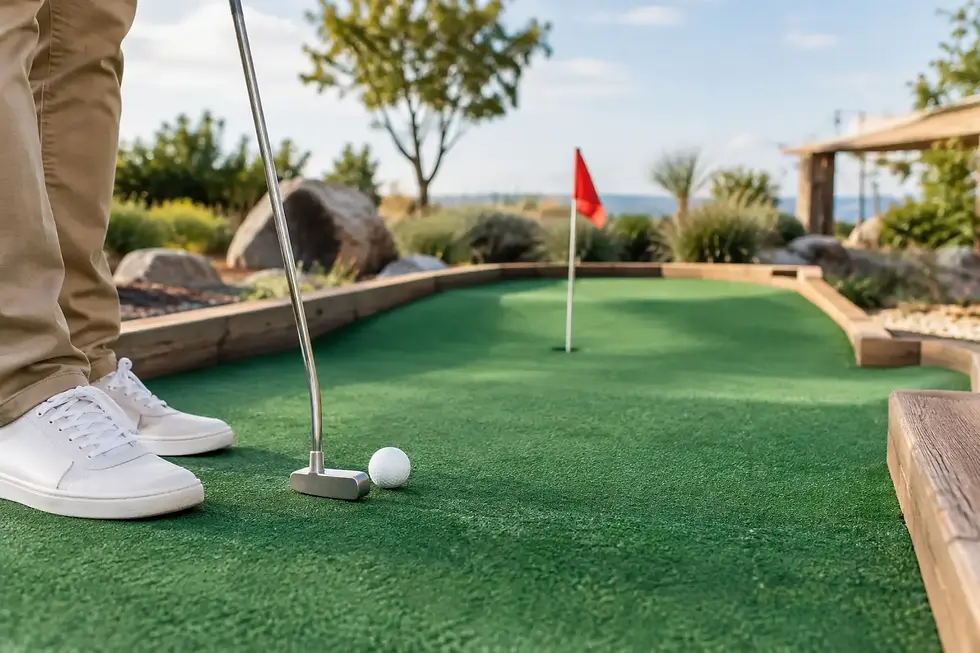
Portable, flexible entertainment has a clear advantage here. It can often be adapted to suit different floorplans and guest numbers without taking over the whole venue. Mini golf is a good example because it can work as a compact feature or a larger focal point depending on the package, and it gives guests freedom to join in at their own pace rather than at a fixed start time.
It is also worth thinking about visual impact. Some entertainment fills time but adds very little to the atmosphere. Other options help dress the space and create a talking point before anyone has even had a go.
Budget matters, but value matters more
Most event organisers start with cost, which is understandable. But the cheapest option is not always the best value, and the most expensive option is not automatically the best fit.
A better question is what your budget is buying you. Does the price include delivery, setup and takedown? Will someone be there to manage the entertainment on the day, or will your team be left handling it? Does it keep guests engaged for a meaningful part of the event, or does it deliver a short burst of novelty and then fade away?
Entertainment that looks affordable can become less appealing once hidden extras and logistics are added in. On the other hand, a professionally managed hire option can save time, reduce stress and give you far more confidence on the day. For many organisers, that reassurance is part of the value.
If you are balancing a limited budget, focus on entertainment that can do more than one job. The best choices often act as an activity, a conversation starter and a visual feature all at once.
Think about timing and guest flow
One of the most overlooked parts of how to choose event entertainment is when it will be used. Even a brilliant entertainment choice can fall flat if it appears at the wrong moment.
Some options work best as a headline feature. Others are better as a drop-in activity running alongside drinks, networking or photos. If your event has natural pauses - during room turnarounds, between ceremony and reception, or while guests arrive - entertainment can keep the energy moving and stop those quieter moments feeling flat.
This is why flexible entertainment is often so useful. Guests can take part when it suits them rather than having to stop everything for a scheduled performance. That tends to work especially well for weddings, exhibitions and corporate functions where not everyone wants to engage in exactly the same way at exactly the same time.
Good entertainment should feel woven into the event, not bolted on at the last minute.
Choose something inclusive, not just impressive
The most talked-about event entertainment is usually the option that gets the most people involved. That does not always mean the loudest, flashiest or most unusual choice.
Inclusive entertainment works because it lowers the barrier to entry. Guests do not need a lot of explanation. They do not need to perform. They do not need to commit to a long session. They can simply join in, enjoy themselves and step away when they are ready.
That matters even more when your guest list is varied. Weddings often bring together family, friends and colleagues. Corporate events may include different departments, clients and senior leaders. Parties can mix children, teenagers and adults. In all of those situations, activities with wide appeal tend to outperform options aimed at a narrow audience.
A well-chosen interactive feature gives people a reason to gather naturally. It creates those easy moments that make an event feel lively without making anyone uncomfortable.
Ask practical questions before you book
Once you have narrowed down your options, the details matter. A reliable entertainment supplier should be able to explain exactly what is included, how the setup works and what they need from the venue.
Ask how long installation takes, whether supervision is included, how much space is required and what happens if plans change. If your event has a specific theme or style, ask whether the entertainment can be tailored to suit it. Small adjustments in presentation can make a big difference to how joined-up the final event feels.
This is also the point to check how self-sufficient the supplier is. The less your team needs to manage on the day, the better. Professional support matters because entertainment should reduce pressure, not add to it.
How to choose event entertainment for different occasions
Different events call for different strengths. Weddings benefit from entertainment that feels social, photo-friendly and easy for all ages to enjoy. Corporate events often need something polished and interactive that helps guests connect without forcing participation. Trade shows usually work best with entertainment that draws attention and encourages footfall. Private parties need something straightforward, fun and easy to fit around food, speeches or dancing.
That is why activity-based entertainment is such a popular choice across occasions. It gives people a shared experience without demanding that the whole event revolve around it. For organisers who want something distinctive but easy to manage, that balance is hard to beat.
Putting Edge, for instance, is designed around that exact need - portable mini golf that looks great, suits a wide range of events and comes with the sort of end-to-end support that makes planning simpler.
Look for memorable, not complicated
There is often a temptation to overthink entertainment and chase something no one has seen before. Originality has its place, but simplicity is underrated. Guests remember what made them smile, what got them chatting and what gave them a reason to join in.
The best entertainment feels effortless from the guest side and well managed from the organiser side. It suits the venue. It fits the audience. It keeps people engaged without creating extra work. That is usually the sweet spot.
If you are deciding between several ideas, choose the one that makes your event easier to enjoy, not harder to run. When entertainment is inclusive, flexible and professionally handled, guests notice the fun and you notice the difference.


Comments