



7 Event Gamification Trends Guests Will Love
A room full of guests does not automatically become a lively event. The best event gamification trends solve the awkward first-15-minutes problem, give people a reason to mingle, and create a little friendly competition without making anyone feel put on the spot. From workplace socials to wedding receptions and exhibition stands, the focus is shifting towards activities that are easy to join, enjoyable across age groups and genuinely worth talking about afterwards.
For organisers, the aim is not to turn every occasion into a complicated tournament. It is to choose entertainment that makes participation feel natural. A well-placed game can become the centre of the room, break down barriers between guests and give your event a memorable point of difference.
1. Social games are replacing passive entertainment
Guests still enjoy music, food and a great setting, but more organisers are building in an activity that gives people something to do together. Passive entertainment can set a mood, while social games create conversation. That distinction matters at events where guests may not already know one another.
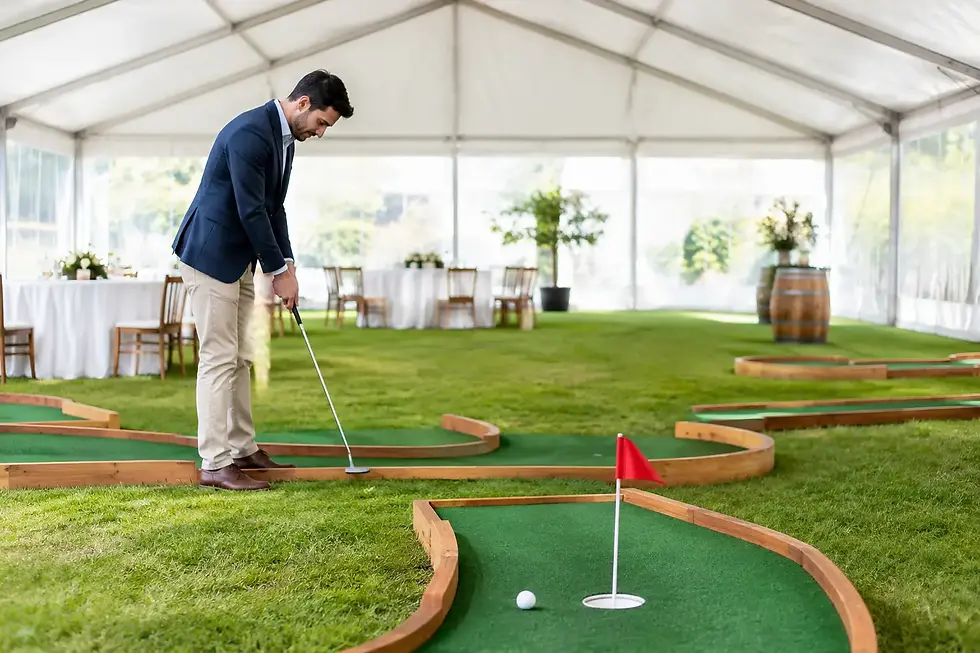
Mini golf is a strong example. It is familiar enough that people understand it immediately, yet light-hearted enough for guests to join for one hole or a full round. No special ability, sporting kit or lengthy explanation is required. People can chat while they play, cheer on colleagues or family members, and take a break whenever they like.
This works particularly well for corporate drinks receptions, wedding evening celebrations and birthday parties with a mixed crowd. Rather than separating guests by confidence or age, a simple game gives everyone a shared reason to take part.
2. Quick-play challenges are taking centre stage
Long, formal competitions can be brilliant for the right group, but most events need entertainment that fits around arrivals, catering, speeches and conversations. That is why short challenges are among the most useful event gamification trends for busy schedules.
Think closest-to-the-pin contests, one-hole challenges, a quickest-round target or a leaderboard for the best score of the hour. These formats let people participate in minutes rather than committing to a full tournament. They also create repeat engagement, as guests return later to see if their score still holds up.
For a trade show, a quick challenge can draw people onto your stand without delaying their day. At a company party, it can add structure without taking over the evening. The key is to make the rules visible and simple, with a clear start and finish.
3. Leaderboards work best when they stay friendly
A leaderboard is an easy way to add energy, especially when teams, departments or families enjoy a little rivalry. Digital displays can look impressive, but a well-designed scorecard or chalkboard can be just as effective. The important part is that guests can see progress and understand how to take part.
There is a trade-off, though. A highly competitive format can appeal to confident players while making others step back. Keep the tone playful by recognising more than just the top score. You might include prizes for the most enthusiastic team name, best fancy dress effort, most creative putting style or a lucky draw for everyone who joins in.
That approach gives more people a chance to win and keeps the experience inclusive. It also suits weddings and family occasions, where the fun is usually more important than crowning a champion.
4. Team-based play is helping people connect
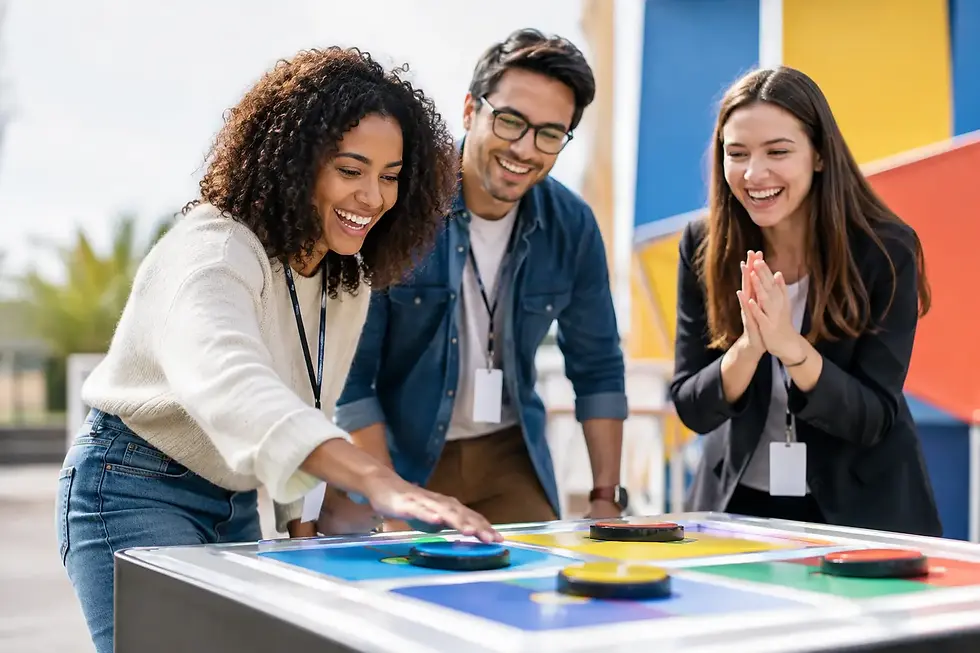
Gamification is particularly valuable when an event has a networking purpose. A room of colleagues, clients or new contacts can feel divided into familiar groups. Team challenges gently mix people together and make introductions easier.
For corporate away days, divide guests into small teams and give each group a scorecard. Add a few conversation prompts at selected holes, or create a course challenge tied to your company theme. At an exhibition, visitors could complete a short game as part of a wider trail across your stand.
Teams work best when they are small and flexible. Avoid putting guests into rigid groups for an entire evening unless that suits the event. Letting people form their own teams or dip in with colleagues creates a more relaxed atmosphere.
5. Branded games are becoming part of the event design
Businesses increasingly want entertainment that feels connected to their brand rather than added as an afterthought. A branded activity can support a campaign, launch or exhibition presence while still delivering proper fun.
Custom signage, colours, scorecards and themed obstacles can turn a game into a natural extension of your event. A tropical island course can brighten a summer party, while a pirate theme brings instant character to a family celebration. For a corporate occasion, subtle branding often works better than covering every surface with logos. Guests should feel they are enjoying an experience, not walking through an advert.
The same principle applies to prizes. A small, relevant reward can encourage participation, but it does not need to be expensive. The best prizes support the occasion and feel proportionate to the challenge.
6. Photo-worthy moments matter, but play comes first
People enjoy sharing an event that looks great, particularly at weddings, launch parties and brand activations. Colourful backdrops, themed obstacles and a visible leaderboard can all encourage photographs. But the experience has to work beyond the camera.
A striking game that is difficult to understand or creates a long queue will soon lose its appeal. Choose an activity with a clear flow, enough space for players and spectators, and a layout that works for your venue. A portable mini golf course gives guests something visually engaging to gather around while also offering a real activity they can enjoy.
Consider where the installation will sit within the event. Near the bar or reception area can encourage casual participation, while a separate activity zone may suit a larger venue. Good placement lets the game add atmosphere without blocking key routes or competing with speeches and dining.
7. Low-pressure participation is the lasting trend
The most successful games do not demand that every guest joins in. They make joining in appealing. Some people will play every hole; others will watch, take photos, keep score or cheer on a friend. All of those interactions add to the atmosphere.
This is why accessible, familiar activities continue to outperform complicated tech for many occasions. Virtual experiences can be exciting, but they may need extra equipment, staff support and a willing queue. They are often best for a very specific audience or a focused brand activation. A physical game with simple rules can be more flexible, particularly when children, grandparents, colleagues and clients are all in the same room.
When planning your entertainment, ask a practical question: will guests understand how to take part within a few seconds? If the answer is yes, you are already creating a smoother experience. Then consider capacity, venue access, timing and whether the activity can be tailored to your theme.
Putting Edge can help organisers match the right portable mini golf setup to the space, guest numbers and style of occasion, from a single putting challenge to a full 18-hole course. With professional setup and takedown included, it is an easy way to add a shared experience without adding another job to your event checklist.
The best trend to follow is not the flashiest one. It is the one that gets guests smiling, talking and joining in at their own pace - leaving your event with the kind of memory that lasts beyond the final score.

Comments