


A Brief History of Mini Golf
- Oliver Naimsith
- May 8
- 6 min read
Mini golf did not start with windmills, neon balls, or seaside-style laughs. The history of mini golf begins with a much simpler idea - giving more people a chance to enjoy putting without needing a full golf course, a private club membership, or a perfect swing.
That early appeal still explains why mini golf works so well today. It is easy to join in, simple to understand, and genuinely fun across mixed age groups. Whether you are planning a wedding, a corporate event, or a birthday party, that broad appeal is not an accident. It is built into the game’s story from the very beginning.
The history of mini golf starts with putting
Before mini golf became the playful attraction people recognise now, it was closely tied to traditional golf. In the late 19th and early 20th centuries, small putting courses began appearing as a way to practise the short game in a more compact setting. These spaces were often more accessible than full golf courses and, importantly, more socially flexible.
One of the earliest examples often linked to the history of mini golf is the Ladies' Putting Club at St Andrews in Scotland, founded in 1867. At the time, social rules limited where and how women could play golf, so putting-only spaces offered a more acceptable alternative. That detail matters because it shows mini golf was, from the start, connected to access. It created room for more people to take part.
That early format was not yet the mini golf most of us picture now. There were no themed obstacles or novelty ramps. It was more restrained, more practice-led, and closely connected to golf tradition. Still, the basic idea was there - short holes, smaller spaces, and a game that was easier to fit into everyday life.
How mini golf became its own attraction
As the 20th century moved on, miniature golf started to split away from standard golf practice and become a form of entertainment in its own right. In the United States especially, purpose-built miniature golf courses grew in popularity during the 1910s and 1920s. They used artificial surfaces and more compact layouts, making them easier to install in urban areas where land was limited.
This was a turning point in the history of mini golf. Once courses no longer needed to imitate traditional greens too closely, designers could make the game more visual, more playful, and more social. Obstacles, creative hole designs, and eye-catching features gave miniature golf a personality of its own.
By the late 1920s, mini golf had become a craze. Rooftop courses appeared in cities, and compact courses offered affordable fun during a period when people wanted leisure that did not feel exclusive. That affordability helped mini golf spread quickly. It was entertainment people could enjoy casually rather than a sport that required long sessions, expensive equipment, or prior experience.
There was, however, a trade-off. As the format became more novelty-driven, some people saw it as less of a sport and more of a light amusement. In reality, that shift was part of its strength. Mini golf did not need to choose between skill and fun. It could hold both.
The rise of themed courses and popular appeal
The next big chapter in the history of mini golf came from design. As courses competed for attention, they became more imaginative. Decorative obstacles, themed environments, and family-friendly layouts made mini golf feel less like a trimmed-down golf game and more like an experience.
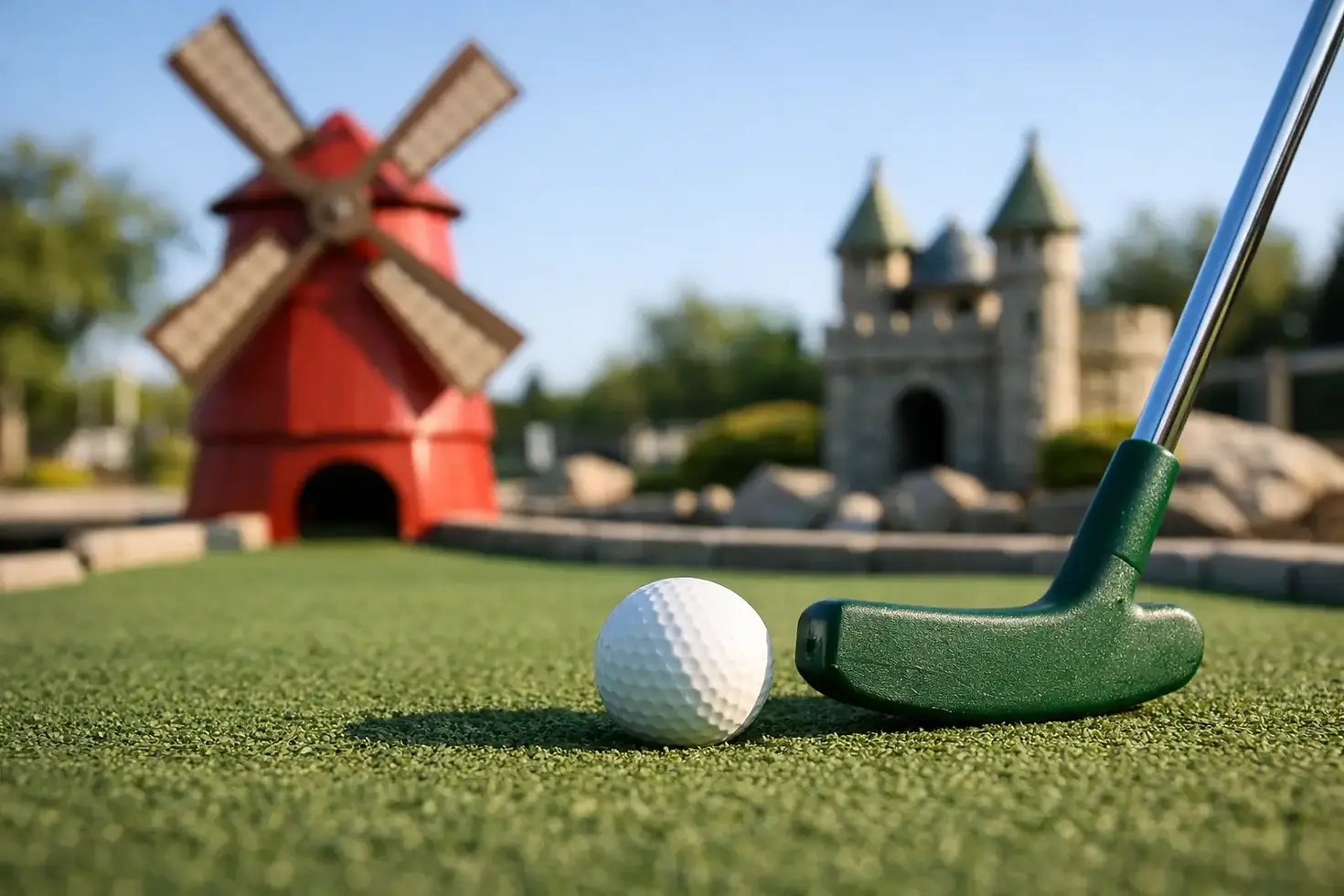
This is where the classic visual language of mini golf really took shape. Windmills, castles, bridges, tunnels, pirate features, tropical themes - all of that came later, as operators realised people were not just playing for the score. They were playing for the atmosphere.
That shift is a big reason mini golf has lasted. Plenty of leisure trends come and go, but mini golf adapted. It stayed simple enough for first-time players and flexible enough to suit new settings. It could work at seaside attractions, holiday parks, town centres, family venues, and eventually private events.
For modern event planners, this part of the story is especially relevant. Themed mini golf still performs well because it gives guests something to do and something to talk about. It creates movement, conversation, and those easy shared moments that make an event feel lively rather than static.
Mini golf in Britain
Although miniature golf developed strongly in the US, Britain has its own place in the story. The UK already had deep golfing roots, so the idea of compact putting games was never far-fetched. Over time, mini golf found a natural home here through seaside attractions, leisure venues, family destinations, and later indoor entertainment spaces.
British audiences have long responded well to activities that feel social without being too demanding. That is one reason mini golf works so well at all sorts of functions across the country. It suits people who want to have a go without committing to something physically intense or overly competitive.
In the UK, mini golf has also benefited from being weather-flexible and venue-flexible. Indoor formats, portable courses, and custom event installations have helped move the game far beyond fixed leisure sites. That change matters because it has turned mini golf from a destination activity into something that can come directly to the occasion.
Why the history of mini golf matters for events today
If you are choosing entertainment for a wedding, staff event, trade show, or party, the history of mini golf explains why it remains such a reliable option. It has always been built around accessibility, sociability, and compact play. Those qualities happen to match exactly what many events need.
A lot of entertainment sounds good on paper but becomes awkward in practice. Some activities need specialist supervision. Others only appeal to one age group, take up too much space, or leave guests watching rather than joining in. Mini golf has survived for so long because it avoids most of those problems.
It is easy to understand in seconds. Guests can join for one hole or stay for a full round. It works as a centrepiece or as part of a wider event mix. It can feel light and playful at a birthday party, polished and branded at a corporate function, or charmingly interactive at a wedding reception.
That does not mean every mini golf setup should look the same. It depends on the audience, venue, and atmosphere you want to create. A trade show stand may benefit from a shorter branded layout that draws footfall and starts conversations. A wedding might suit a more elegant course that encourages mingling between guests who do not already know each other. A family party often calls for bold colours, playful themes, and something for everyone.
From fixed courses to portable experiences
One of the biggest modern developments in the history of mini golf is portability. Instead of asking people to travel to a course, today’s event setups can bring the course to them. That has opened the door for mini golf to appear in hotels, offices, marquees, exhibition halls, village venues, gardens, and all sorts of celebration spaces.
This flexibility has changed how people think about the game. Mini golf is no longer just a leisure outing. It can be part of a brand activation, a team-building day, a product launch, or an evening reception. Because it is visually engaging and simple to take part in, it helps events feel active without becoming complicated.
That is exactly why professionally managed course hire has become so attractive. Event organisers want entertainment that is memorable, but they also want it to be easy to book, easy to fit into the venue, and easy for guests to enjoy. A well-planned mini golf installation delivers all three.
For that reason, businesses such as Putting Edge have become part of the latest chapter in mini golf’s evolution. The game has moved from exclusive putting spaces to public amusement, then from fixed attractions to tailored event entertainment. It is still doing what it has always done best - bringing people together around a format that feels welcoming from the first putt.
A game with staying power
The most interesting thing about mini golf is not that it has changed. It is that it has changed without losing its core appeal. The surfaces, themes, and settings may look different now, but the basic promise remains familiar: low-pressure fun, shared experience, and just enough challenge to keep people smiling.
That is why the history of mini golf is more than a timeline of quirky obstacles and colourful courses. It is the story of a game that kept finding new ways to fit how people spend time together. And when you are planning an event, that kind of staying power is worth paying attention to.
The best entertainment does not force guests to work out how to enjoy themselves. It simply gives them a reason to step in, have a go, and enjoy the moment together.


Comments